



An argenx representative will contact you soon, so keep an eye on your inbox.
gMG is a chronic, debilitating, IgG-mediated autoimmune disease1,2
Patients can experience fluctuating weakness across critical muscle groups3
Bulbar
Impaired speech, chewing, or swallowing4
Respiratory
Dyspnea, risk of myasthenic crisis4
Gross motor
Impaired mobility, muscle fatigability5
Ocular
Diplopia, ptosis1
of patients with gMG initially present with ocular symptoms.6
gMG=generalized myasthenia gravis; IgG=immunoglobulin G.
IgG autoantibodies are a key driver of gMG1,7,8*
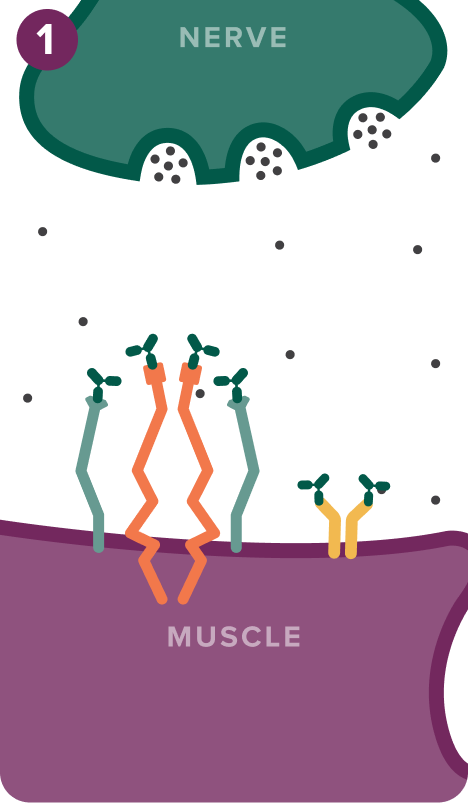
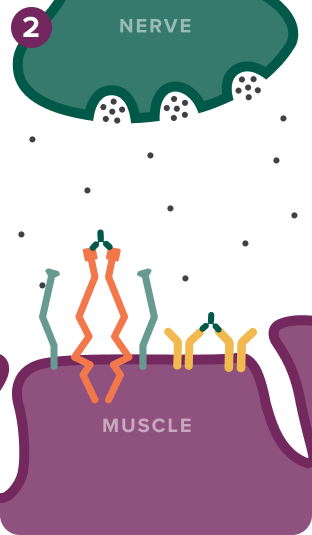
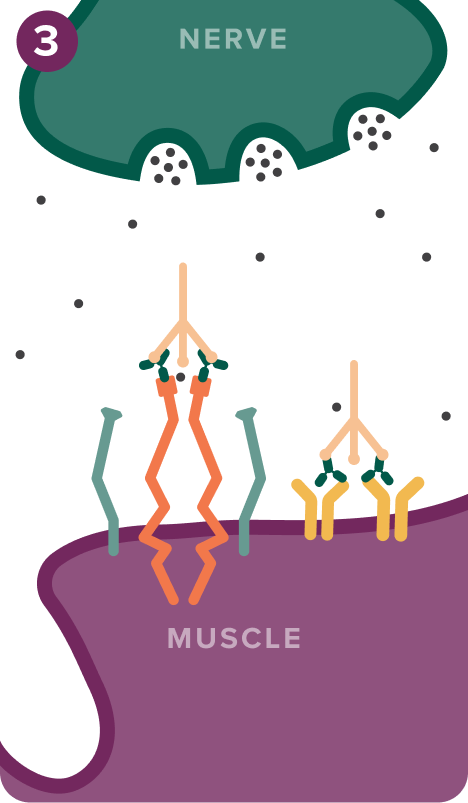
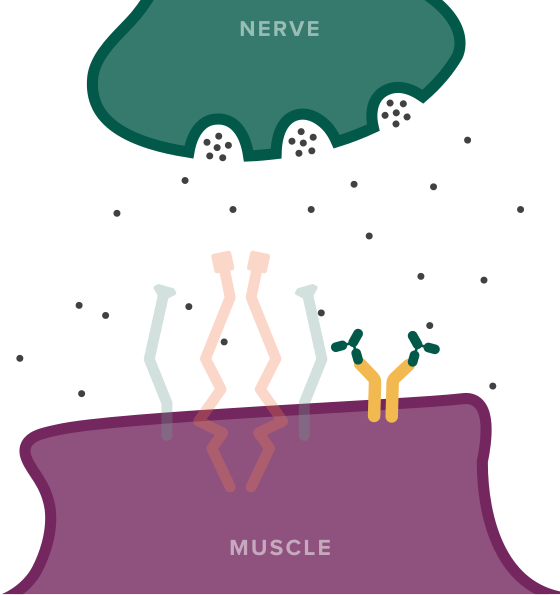
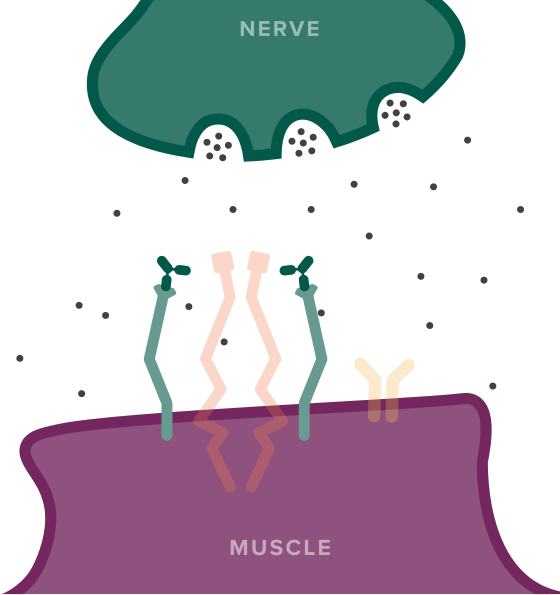
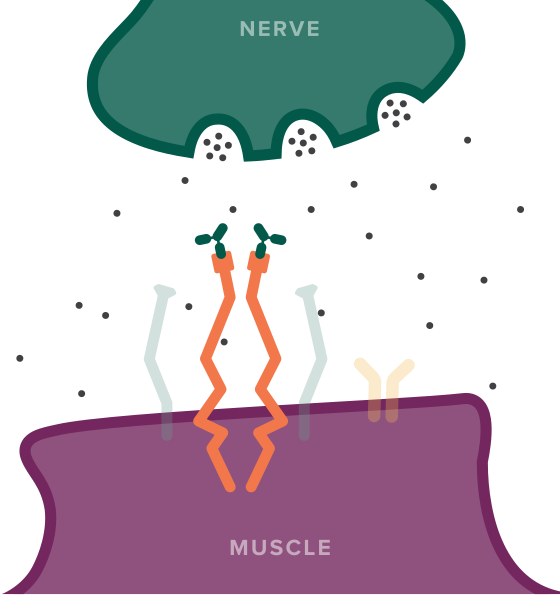
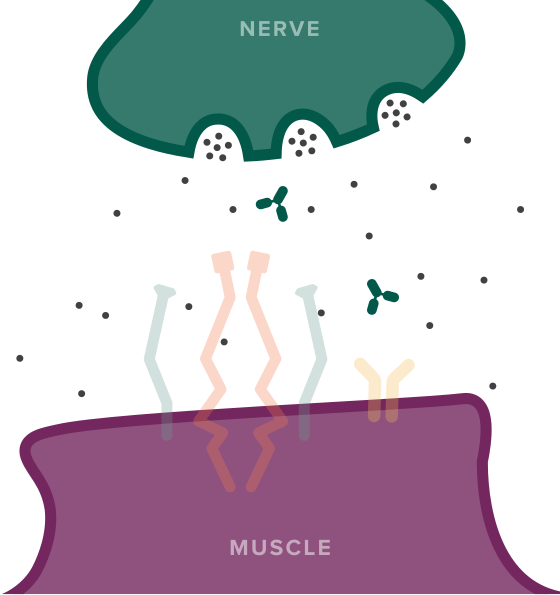
Pathogenic IgG autoantibodies target multiple components of the NMJ, including AChR, MuSK, and LRP41,7,8:
KEY
- <p><b>1. Functional blockade</b></p>
- <p>2. Cross-linking</p>
- <p><b>3. Complement activation</b></p>
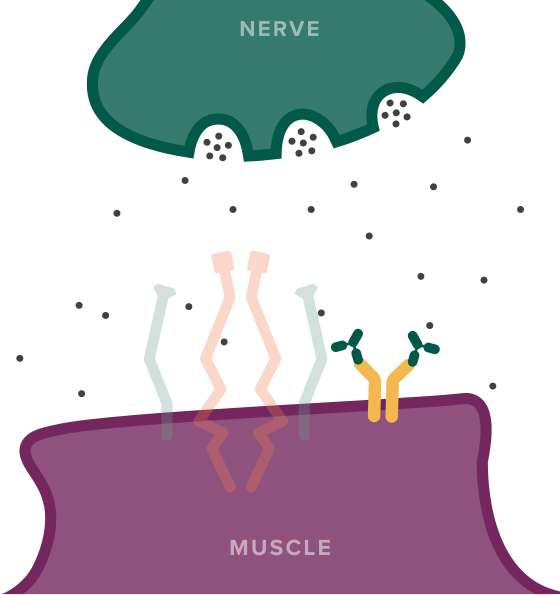
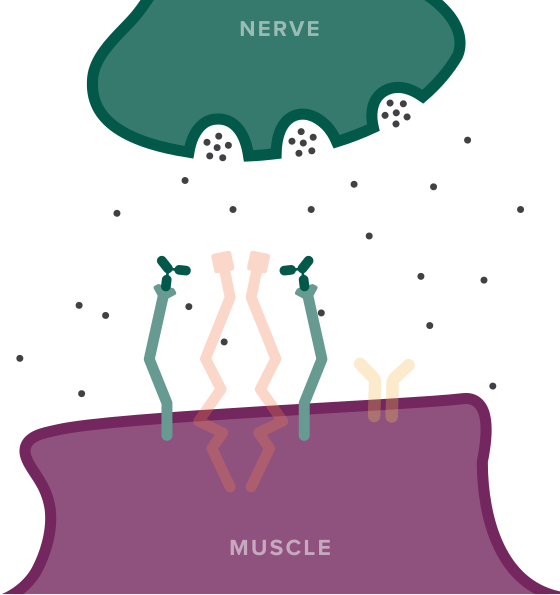
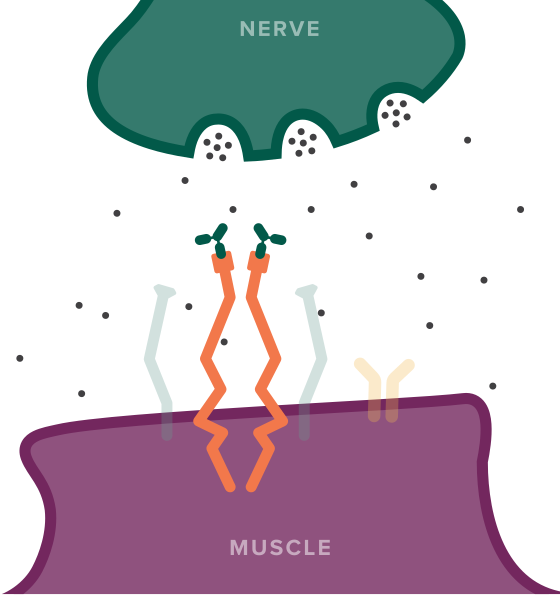
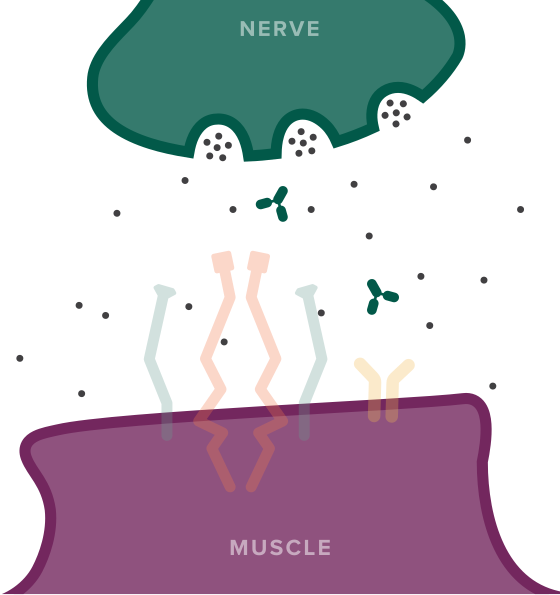
AChR=acetylcholine receptor; gMG=generalized myasthenia gravis; IgG=immunoglobulin G; LRP4=low-density lipoprotein receptor-related protein 4; MuSK=muscle-specific tyrosine kinase; NMJ=neuromuscular junction.
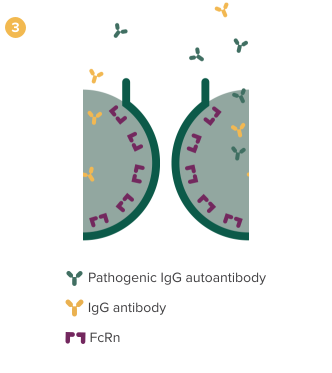
FcRn plays a critical role in IgG regulation8,12,13
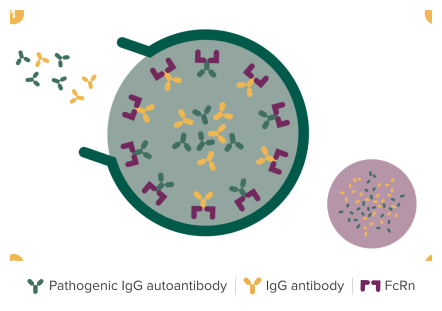
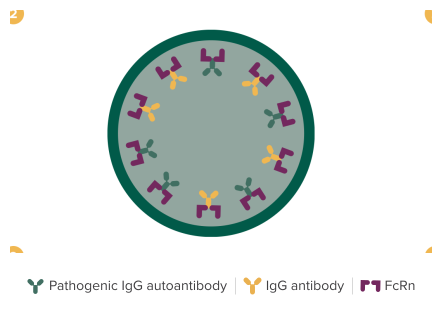
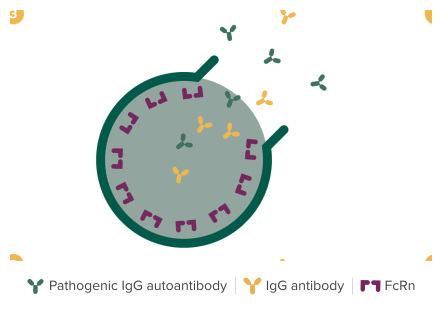
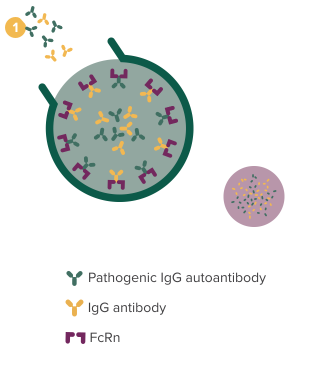
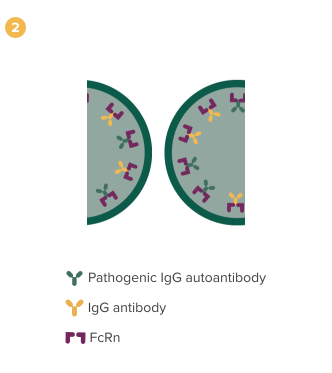
FcRn plays a critical role in enabling damage at the NMJ by:
1. Binding IgG antibodies, including autoantibodies
2. Rescuing them from lysosomal degradation
3. Recycling them back into circulation
In doing so, FcRn helps maintain high levels of circulating IgG antibodies, including IgG autoantibodies.
- NA
- NA
- NA
- test
- test
- test
This recycling process prolongs the half-life of IgG antibodies and maintains high concentrations of pathogenic IgG autoantibodies that attack vital components of the NMJ.13-16
FcRn=neonatal Fc receptor; IgG=immunoglobulin G; NMJ=neuromuscular junction.
See how these mechanisms affect life with gMG
gMG=generalized myasthenia gravis.
References: 1. Gilhus NE. N Engl J Med. 2016;375(26):2570-2581. doi:10.1056/NEJMra1602678 2. Jackson K et al. Neurol Ther. 2023;12(1):107-128. doi:10.1007/s40120-022-00408-x 3. Gilhus NE et al. Nat Rev Neurol. 2016;12(5):259-268. doi:10.1038/nrneurol.2016.44 4. Dewilde S et al. BMJ Open. 2023;13(1):e066445. doi:10.1136/bmjopen-2022-066445 5. Twork S et al. Health Qual Life Outcomes. 2010;8:129. doi:10.1186/1477-7525-8-129 6. Grob D et al. Muscle Nerve. 2008;37(2):141-149. doi:10.1002/mus.20950 7. Rødgaard A et al. Clin Exp Immunol. 1987;67(1):82-88. 8. Behin A, Le Panse R. J Neuromuscul Dis. 2018;5(3):265-277. doi:10.3233/JND-170294 9. Wolfe GI et al. J Neurol Sci. 2021;430:118074. doi:10.1016/j.jns.2021.118074 10. Pasnoor M et al. Presented at: American Academy of Neurology (AAN) Annual Meeting; April 22-27, 2023. Boston, MA. 11. Dewilde S et al. Adv Ther. 2024;41(1):271-291. doi:10.1007/s12325-023-02704-w 12. Zhu LN et al. Neural Regen Res. 2023;18(8):1637-1644. doi:10.4103/1673-5374.363824 13. Roopenian DC, Akilesh S. Nat Rev Immunol. 2007;7(9):715-725. doi:10.1038/nri2155 14. Ward ES, Ober RJ. Trends Pharmacol Sci. 2018;39(10):892-904. doi:10.1016/j.tips.2018.07.007 15. Ulrichts P et al. J Clin Invest. 2018;128(10):4372-4386. doi:10.1172/JCI97911 16. Mantegazza R, Antozzi C. Front Neurol. 2020;11. doi:10.3389/fneur.2020.00981

For US audiences only. © 2026 argenx US-UNB-25-00159 V1 03/2026. All Rights Reserved.
We’ll be in touch!
Connect with us
Receive information about gMG from argenx
We’ll be in touch!
An argenx representative will contact you soon, so keep an eye on your inbox.
You’re about to access information on another website
Just a quick heads up—we're not responsible for verifying or maintaining information outside of this website.
Search for: