

An argenx representative will contact you soon, so keep an eye on your inbox.
What could progress for your patients look like?
Improvement looks different for everyone. A validated gMG scale can help patients and HCPs communicate more effectively about true progress.
Striving for Minimal Symptom Expression (MSE)
MSE is an MG-ADL total score of 0 or 1, meaning no or almost no symptoms. Aiming for MSE can help patients get back to doing some of their daily activities.3
gMG=generalized myasthenia gravis; HCP=healthcare professional; MG-ADL=Myasthenia Gravis Activities of Daily Living; MGII=Myasthenia Gravis Impairment Index.
—Real patient living with gMG
gMG=generalized myasthenia gravis; MG=myasthenia gravis.
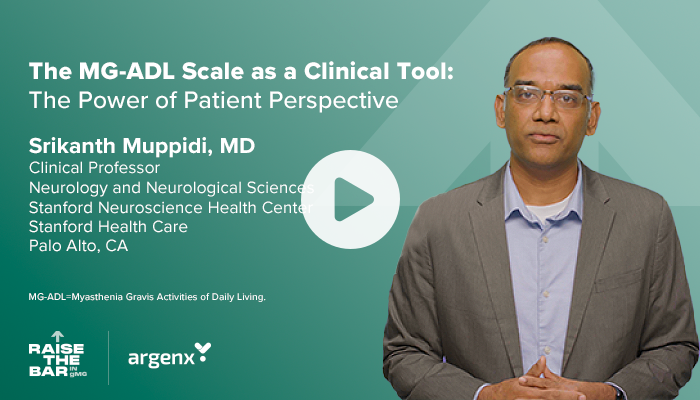
Hear from experts about the potential benefits of utilizing the MG-ADL scale and working toward MSE
Explore additional resources for you and your patients
References: 1. Wolfe GI et al. Neurology. 1999;52(7):1487-1489. doi:10.1212/wnl.52.7.1487 2. Barnett C et al. Neurology. 2016;87(9):879-886. doi:10.1212/WNL.0000000000002971 3. Uzawa A et al. Acta Neurol Belg. 2023;123(3):979-982. doi:10.1007/s13760-022-02162-1

For US audiences only. © 2026 argenx US-UNB-25-00162 V1 03/2026. All Rights Reserved.
We’ll be in touch!
Connect with us
Receive information about gMG from argenx
We’ll be in touch!
An argenx representative will contact you soon, so keep an eye on your inbox.
You’re about to access information on another website
Just a quick heads up—we're not responsible for verifying or maintaining information outside of this website.
Search for: